

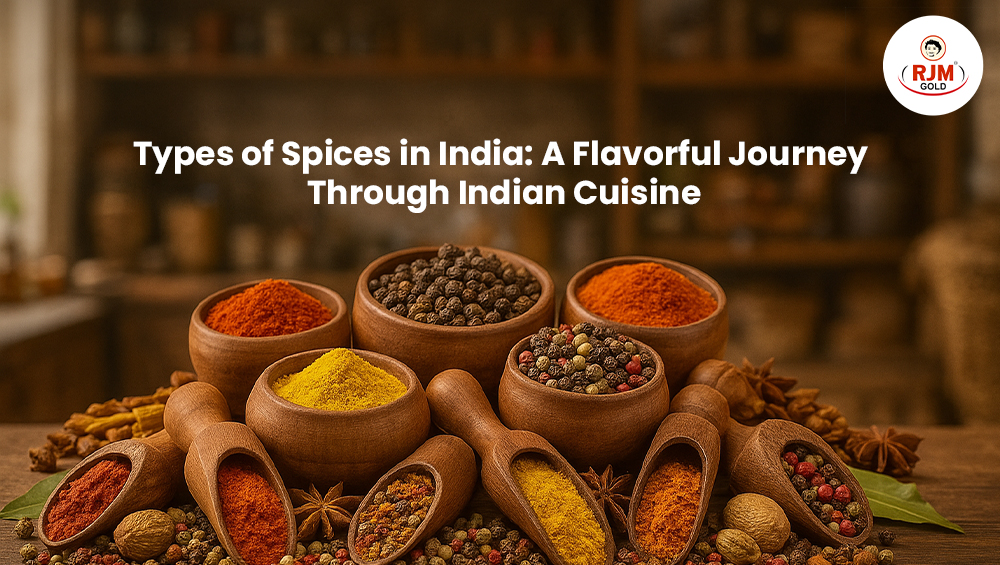
From the bright red of spicy Curry to the golden yellow of Dal and the beautiful aroma of biryani, Indian food is truly a feast for your senses. Behind all these amazing flavors is one key ingredient spices. Spices are not just here for adding heat. They bring aroma taste colour and even health benefits. In Indian cooking spices are everything. They have been used for thousands of years not just for food but also for healing.
India has long been known as the land of spices attracting traders and explorers from different parts of the world. from spice routes of the past to modern kitchens Indian spices have travelled far and wide. In this guide you can learn everything about types of spices in India.
Essential spices in everyday Indian kitchen
Turmeric
It is one of the most common types of spices, found in every Indian household. It has all these slightly bitter tastes. You can use it in curries as it gives its yellow color and also in vegetables. The spice is known for its anti-inflammatory and antioxidant properties so it boosts your immunity and also helps with skin and joint health. Turmeric is sacred in Indian culture too; it’s used in religious rituals, weddings and home remedies.
Cumin
Jeera is that seed you hear popping when someone’s cooking tarka at home. It has a warm and nutty taste with a smoky touch. You can add it whole to hot oil or ground into spice mixes and sprinkle on charts. It helps with digestion and is completely rich in iron. Roasted jeera powder in buttermilk is not just refreshing but also good for your tummy.
Coriander
Coriander does double duty. You get seeds and leaves from the same plant. The taste is a little light and slightly sweet. You can ground coriander into Curry powders or use as seeds and Pickles. Don’t forget the fresh green leaves on the top of your Curry. It’s great for digestion and can also help with blood sugar. Well, the fun fact is no Indian dish is ever complete without a sprinkle of fresh coriander on top no matter how many different types of spices you actually end up using.
Red Chilli powder
Do want your food spicy? The taste will depend whether the red Chilli powder is mild or super-hot. Everything from curries to dry subsidies to marinades are incomplete without red Chilli powder. It’s great for you as it’s loaded with vitamin C and helps with metabolism. But you must use it carefully as you can always add more but you cannot take it out.
Garam Masala
This one is not just one spice it’s a mix of Indianspices. It is generally added at the end of cooking to boost flavor and smell. The benefits basically depend on what’s in it usually includes cinnamon pepper and cardamom which all are great for your health. Each region and home have its own version. No two garam masalas are the same ever.
Spices that smell as good as they taste
Cardamom
There are two types of cardamom which include green and black. Green is sweet and floral, perfect for desserts and biryani while black is smoky and strong, generally used in gravies and meat dishes. They are good for you as it helps in digestion and also freshens breath. Green elaichi in Chai is nothing but pure bliss.
Cloves
Tiny but mighty Spices of India. The taste is strong, a little sweet and a bit spicy. You can add it to rice gravies and top tea. Often you can use cloves as a whole. It’s great for oral health and packed with antioxidants. Too many cloves can overpower your dish but a little goes a long way.
Cinnamon
Not just for cookies cinnamon is one of the most commonly used Indian masala. The taste is completely sweet and woody. Generally, you can use it in rice dishes, sweets, Chai and even in curries. The Indian tournament is slightly different from what you find in western deserts; it’s mild and less sweet.
Black pepper
The original spice. The taste is completely sharp and spicy and you can use it in almost everything from eggs, soups, meats and spice mix. It helps in absorbing turmeric and fights inflammation. Back in the day black pepper was worth its weight in gold.
Fenugreek
Fenugreek is available in two forms: seeds and dried leaves. Slightly bitter but tasty in Pickles and curries. You can crumble over gravies for a rich earthy aroma. Fenugreek is great for digestion and blood sugar control.
The spices that kick-start the flavor
Some spices on the Spices list, are completely used right at the beginning. The drizzle and hot oil kick off the cooking process with an amazing smell.
Mustard seeds
You can hear them pop in the pan. The taste is pungent and slightly nutty. You can use them in South Indian tarkas or Pickles. it’s great for skin and digestion. In most Indian kitchens you can find black or brown mustard seeds.
Ginger
Spicy warm and familiar. It is one of the most common Indian spices names. It is generally used in pastes for almost all curries. Ginger can be dried and used in sweets or spice powders. It helps with nausea cold or even titration. Ginger tea is everyone’s go to when they have a sore throat.
Garlic
Garlic is completely favorite across India. It’s completely strong and savory. You can generally use it in gravies, chutneys and everywhere else. Boosts immunity and heart health. Garlic and onion make the base of many north Indian dishes.
Curry leaves
Fresh is always the best. Taste is completely nutty and aromatic. It is generally used in tadka in South Indian dishes and coconut chutneys. Is great for your hair eyes and digestion. You need to keep them in your freezer if you cannot find them fresh.
How Indian spices help your health?
Besides tasting amazing these spices really support your health. Turmeric fights inflammation and pain while cumin helps with gas and bloating. Cloves garlic and cinnamon keep your heart healthy and ginger and pepper are great when you are sick. And you don’t even need big amounts a pinch here and there is enough.
Using spices like a pro
- You must add whole spices to hot oil to release their flavor. Don’t burn them keep an eye on the heat. Always use small amounts because they are completely powerful. Store your spices in air white jars away from the sunlight. Learn by cooking you will get better every time.
So above all you need to know that there you have it a flavorful journey through the magical world of Indian spices. These spices are not just about taste they actually carry stories traditions health benefits and memories. Every kitchen smell different even every recipe has its own makes and that’s the beauty of Indian cooking. So don’t be afraid to start small try cumin and turmeric first add some garam masala to your rice. Crumble some kasoori methi in your Curry. And remember it’s all about balance and love that’s the real spice.
FAQ
Which spices should you start with as a beginner?
Start with turmeric coriander red Chilli powder cumin and garam masala. They are used in most Indian dishes and are super beginner friendly.
What is the best way to store spices?
You need to keep them in airtight containers in cool dry place and avoid sunlight it makes them lose their flavor faster.
Can you skip Spices in Indian food if you don’t like spicy food?
Yes of course, Indian food is not always hot. A lot of spices at flavor without heat like cumin coriander and cardamom you can always control the spices.