

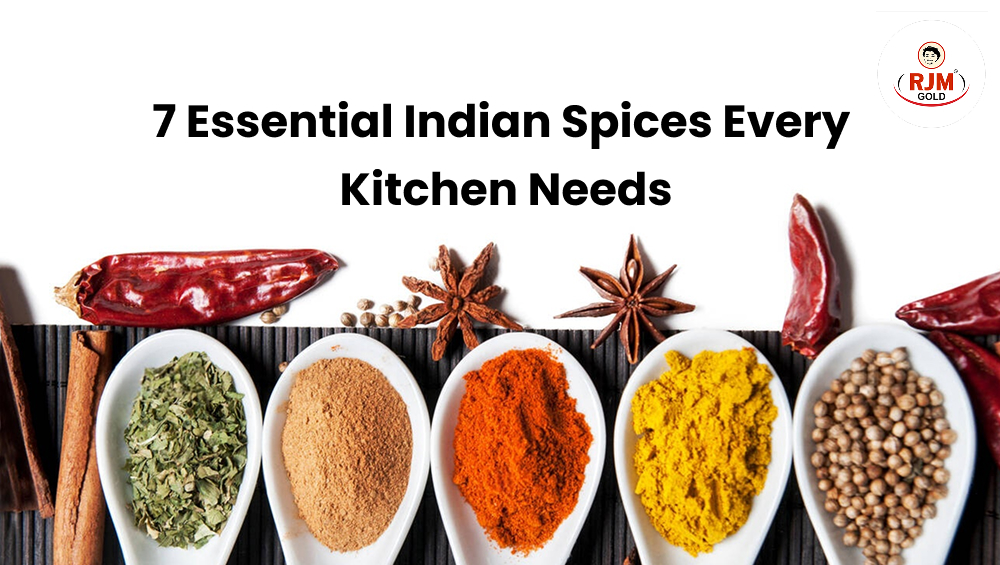
Just think about walking into an Indian kitchen. The aroma hits you with different warm earthy spices and is inviting. You see colorful jars filled with powdered seeds and dried herbs. These are not just ingredients; Indian spices are actually the heart of cooking. Indian Spices give Indian food its rich taste and deep cultural roots.
If you are just getting started with Indian cooking or you want to understand the basics you don’t need to buy 100 spices right away. Instead, you can start with a small set of the most essential Indian spices. These powerful ingredients can help you make dozens of delicious dishes at home. In this guide you can check out seven essential Indian spices every kitchen needs.Just think about walking into an Indian kitchen. The aroma hits you with different warm earthy spices and is inviting. You see colorful jars filled with powdered seeds and dried herbs. These are not just ingredients; Indian spices are actually the heart of cooking. Indian Spices give Indian food its rich taste and deep cultural roots.
If you are just getting started with Indian cooking or you want to understand the basics you don’t need to buy 100 spices right away. Instead, you can start with a small set of the most essential Indian spices. These powerful ingredients can help you make dozens of delicious dishes at home. In this guide you can check out seven essential Indian spices every kitchen needs.
Turmeric
The golden spice of India’s
Turmeric is one of the oldest types of Indian spices. It’s bright yellow and comes in powder form made from a root that looks like ginger. In Indian culture turmeric is way more than just a spice it’s actually used in weddings, home remedies and religious rituals. It has a slightly bitter earthy flavor. It’s not spicy but it adds depth to the dishes and gives them a warm yellow color.
Why is it essential?
Turmeric gives beautiful color to your curries And of course rice. It is known for its anti-inflammatory and antibacterial properties. It helps with digestion and boosts the immune system.
How to use it?
Just add a pinch to lentils curries and vegetable stir fries. You can even mix it with warm milk for a healing drink. You can also use it in rice for color and health benefits. But always remember to cook turmeric in oil or ghee. It releases more flavor and helps your body absorb its nutrients better.
Cumin seeds
The aroma starter
Cumin seeds are small and brown but when you put them in hot oil they pop and release a beautiful nutty fragrance. This is called tadka or tempering and it’s often the first step of Indian cooking even before you add Indian masala, you add the seeds. Cumin is used in both North and South Indian dishes. It is warm, earthy and slightly bitter.
Why is it essential?
Cumin seeds can add flavor aroma to rice and curries besides chutneys. It also helps with digestion and bloating. They are generally used whole or ground in many Indian spices.
How to use it
you can heat in oil to start your dish. Furthermore, dry roast and green to sprinkle on Rita and drink full stir you can even mix with other spices for Curry powders or marinades. Always roast cumin seeds on low heat before grinding them to bring out a rich nuttier flavor.
Coriander powder
The soft touch
Coriander powder is made from dry coriander seeds and is one of the most used Kitchen spices. Unlike your cumin and turmeric, coriander has a very mild and almost sweet flavor which makes it a great spice for layering flavors without overpowering the dish. It tastes mild and slightly sweet.
Why is it essential?
Coriander powder can balance all the spicy flavor and also adds texture and thickness to gravies. At the same time, you can use it in almost every Indian Curry or sabzi.
How to use it?
Just add one or two tablespoons to vegetable dishes or meat gravies and dals. If you want to make a Curry base you can even combine it with turmeric and chili powder. It’s perfect for marinades and dry rubs for meats. The best part is that you can even grind your own coriander seeds for a fresher, stronger flavor if you don’t want to go for a store bought one.
Red chili powder
The heat maker
This is where Indian food gets its spice cake. Red chili powder comes from dried red chillies and is one of the most important cooking spices for adding both color and heat to the dishes. But not all the chili powders are the same. For example, Kashmiri red chili powder gives a bright red color with mild heat while guntur chilli powder is quite spicy. It is spicy, smoky and slightly pungent depending on the variety.
Why is it essential?
It brings heat and color to your dishes and also it is used in almost every Indian recipe from curries to pickles. The best of all is that it can also add excitement to otherwise bland dishes.
How to use it?
You can use half tablespoon in gravies or dry subsidies. mix with turmeric and coriander powder to form the base for Indian curries. You can also add it in tadkas or tempering for extra flavor. Start with a smaller amount and add more if needed, you can always make a dish spicier but not the other way round.
Mustard seeds
The tiny powerhouse
Mustard seeds are used especially in South Indian and Maharashtrian cooking. These small round seeds are added to the hot oil where they pop and sizzle giving the dish a nutty slightly spicy flavor. There are three types black, brown and yellow with black being the most pungent. The taste is pungent, nutty and slightly spicy; it becomes milder after cooking.
Why is it essential?
It can add flavor to dal’s sambars, chutneys and pickles. Furthermore, it also goes well with curry leaves and dry red chillies in South Indian dishes. The best part is that mustard seeds help you with digestion and are believed to increase your appetite.
How to use it?
You can heat mustard seeds in oil until the seeds start to pop. Combine them with Curry leaves and red chili for South Indian tempering. You can even use mustard seeds in pickles or chutneys. Don’t walk away while cooking mustard seeds. They pop up quickly and if burned they taste really bitter.
Garam masala
The finishing touch
Garam masala is not one spice, it’s a blend of several. Every family might have their own recipe. but most common garam masalas include essential spices, like cardamom cloves black pepper, cumin and nutmeg. It is usually added at the end of cooking to boost aroma and taste. It tastes warm aromatic and spicy sweet.
Why is it essential?
Garam masala enhances aroma and depth in dishes. You can generally use it in biryanis or soups and lentils. In short it gives the signature Indian flavor to a dish.
How to use it?
Just add 1 1/2 to one tablespoon at the end of cooking and mix it into marinades and spice cubes. You can sprinkle on top of dishes like Chole or rajma before serving. You can always buy small amounts or make your own at home. Freshly ground garam masala is always more flavorful.
Asafoetida
The secret ingredient
it might not look or smell great in its raw form but once cooked it transforms a dish. Asafoetida is basically used in vegetarian and lentil dishes and it’s a very important part of many South Indian recipes. Hing is natural digestive aid which is why it’s often used in legumes and dals which can cause gas. The taste is strong onion garlic like aroma when cooked.
Why is it essential?
It helps in digestion and adds flavor without using onion or garlic. It is generally common in dal’s curries and South Indian dishes.
How to use it
Just a pinch is enough. You can add it to hot oil or ghee at the start of cooking. Then you can combine it with mustard seeds and red chilies and other common spices, for tempering. But you must always use the compound hing that’s mixed with flour. It’s easier to handle and store.
How to store Indian spices?
Now that you have stocked your spice rack you will want to keep them fresh. Spices can lose their flavor aroma if you do not store it the right way. Always store your Indian spices in airtight containers and keep them away from sunlight, moisture and heat. The most important part is to use a dry spoon when scooping. A great way to store your most used spices is a masala dabba around a steel box with small containers inside.
So, spices are not just about making food spicy, they bring balance flavour colour and health benefits. Each spice has its own personality and purpose and when combined they create something magical. Whether you are cooking a comfortable dal or a flavourful biryani, these seven essential spices can help you unlock a world of delicious possibilities in Indian cuisine. Ready to bring authentic Indian flavors to your kitchen? Visit RMJ Gold today.